
Finding Green Township Residents
There is no single official roster for Green Township. Start with an address when the question concerns a parcel, an owner, or a past transfer. Start with a full name when the question is registration, a court case, an estate, or a professional credential. For earlier households, use a date and a community name alongside the surname. Green Township is unincorporated and much of its mail uses Cincinnati, so a postal label alone is not enough. The Hamilton County parcel record and the township field are the practical checks before treating a record as local.
Each source proves a different thing. The Auditor identifies a taxable parcel and its transfer context. The Recorder identifies parties to a recorded instrument. A voter record can corroborate registration at a point in time. A directory can put an adult in a named community during a published year. None of those records is a complete household list. Renters, protected voters, utility customers, and many household members do not appear in these public routes.
- Search the county property roll by owner, street address, or parcel number when the starting point is a property.
- Use the Ohio voter lookup for a one-person registration and precinct check, not a street roster.
- Carry the parcel, transfer date, and legal description into the Recorder's document index.
- For an earlier household, search CHPL's Hamilton County directory collection and pair the result with census or deed evidence.
- When an online index stops, request a clearly described public record from the office that holds it.
Where Green Township Resident Records Begin
Green Township keeps its own administration, police, right-of-way, nuisance, and limited zoning files. Hamilton County keeps the core property, deed, court, probate, election, and many certificate paths. The division matters most near the Northeast Green Township and White Oak zoning district, because much of the remaining township is routed to County Planning and Development. For a detailed property-by-address sequence, use the Green Township street directory after identifying the responsible office.
Hamilton County Recorder
138 E. Court St., Room 205
Cincinnati, OH 45202
513-946-4560
Hamilton County Auditor
County property and tax records
Parcel, transfer, and assessment trail
See county contact directory
Hamilton County Board of Elections
4700 Smith Road
Cincinnati, OH 45212
513-946-8500
The Township government overview is useful for identifying the local administrative office before a request is sent to the wrong jurisdiction.
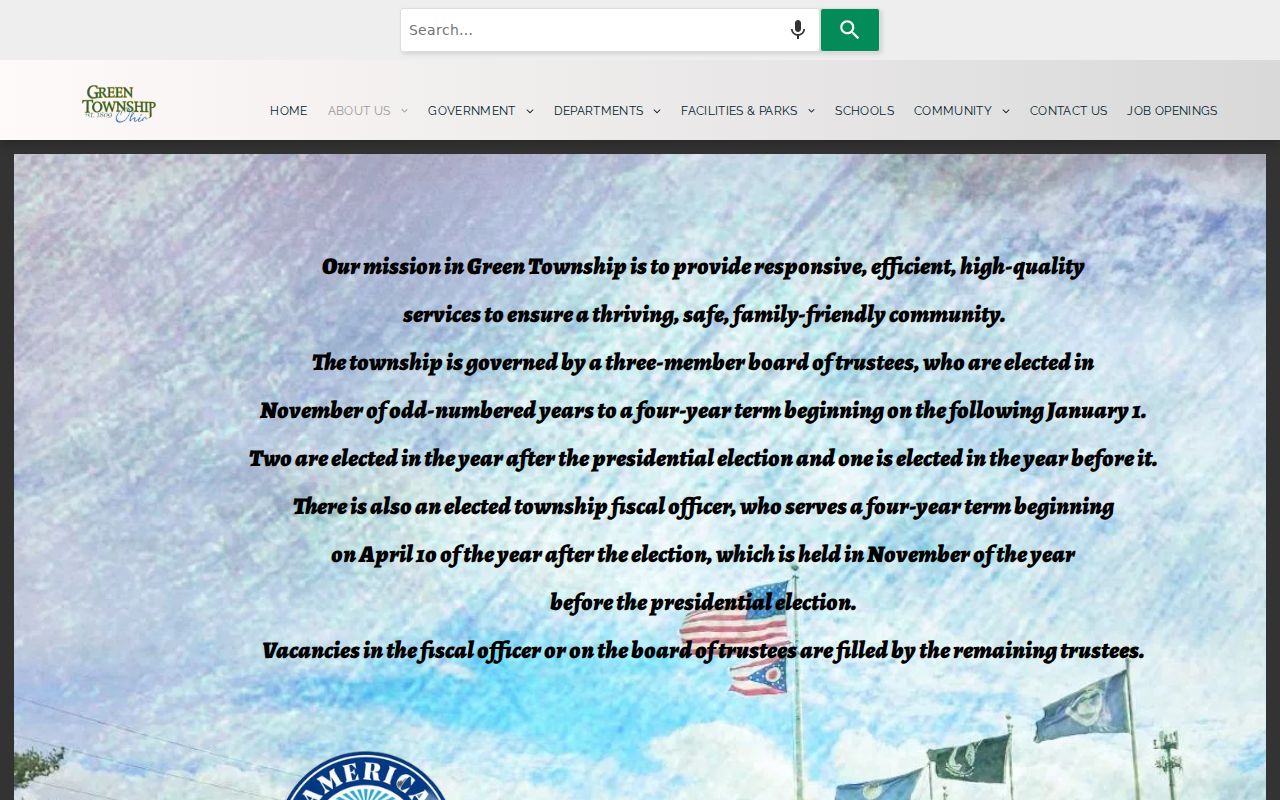
Its Cincinnati mailing address identifies the township office, but a mailing city does not convert a Green Township record into a City of Cincinnati record.
Green Township Parcels Start at the Auditor
The Hamilton County Auditor Property Search is the cleanest first stop for a Green Township address. Its Street Address route separates House # Exact/Low, House # High, and Street Name. The form tells users to omit the street suffix. Owner, organization, other-name, parcel ID, sales, and advanced routes are also available. Open a candidate property rather than relying on a long result list. The detail is where the parcel number, situs address, legal description, tax district, and transfer facts connect an everyday address to a durable land record.
A postal delivery address may not match one taxable parcel. Condominiums, retired parcels, and combined lots need the parcel and legal description checked before a conclusion is drawn. Broad advanced searches stop at the first 1,000 results. The county also disclaims any warranty of data accuracy or completeness, so a result is a starting record, not a final finding.
| Auditor route | Field or output | Use in a resident trail |
|---|---|---|
| Street Address | Exact/low number, high number, street name | Find a candidate parcel or a bounded street range |
| Owner / organization | Name-based property results | Test a recorded ownership lead |
| Parcel ID | Parcel number | Bridge to the Recorder's Auditor-number search |
| Property detail | Situs, legal description, tax and transfer facts | Separate property location from a mailing address |
See the Auditor property-search screen before entering an address.
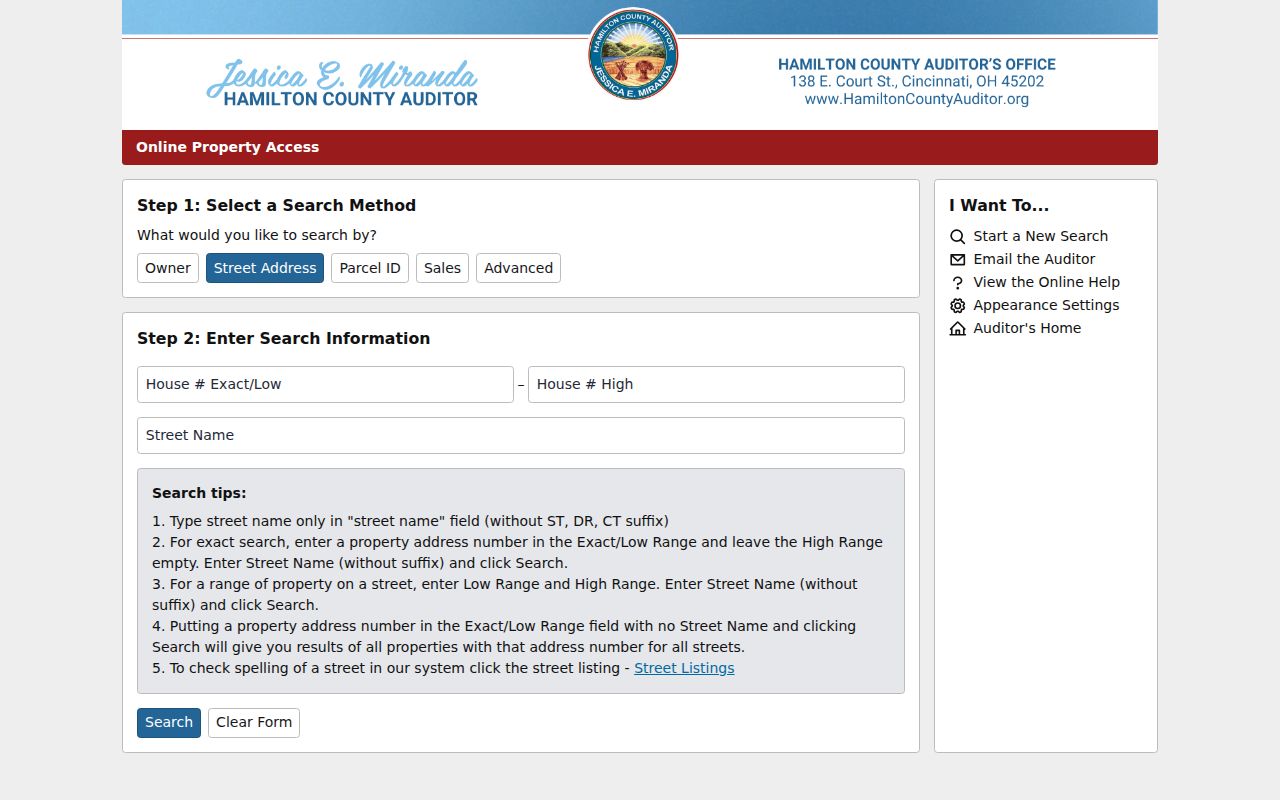
The screen shows why address, owner, and parcel routes should not be treated as interchangeable searches.
Green Township Deed Clues in Acclaim
The Recorder's Acclaim index offers free recorded-document searching. Its paths include name, date, document type, book and page, instrument number, subdivision or lot, section-town-range, and Auditor number. The Recorder directs researchers to obtain the current owner, transfer date, and legal description from the Auditor first. That handoff reduces same-name errors and lets the document be tested against the parcel rather than a name alone.
Modern name searching is generally most useful from 1988 forward. Earlier work often turns on book and page navigation. Historic grantor and grantee indexes cover 1914 through 1988, and the Recorder describes deeds from 1789 to the present. A deed identifies a party to a transaction and its date. It does not identify everyone living at the address.
Open the Acclaim home screen to see its document-search choices.
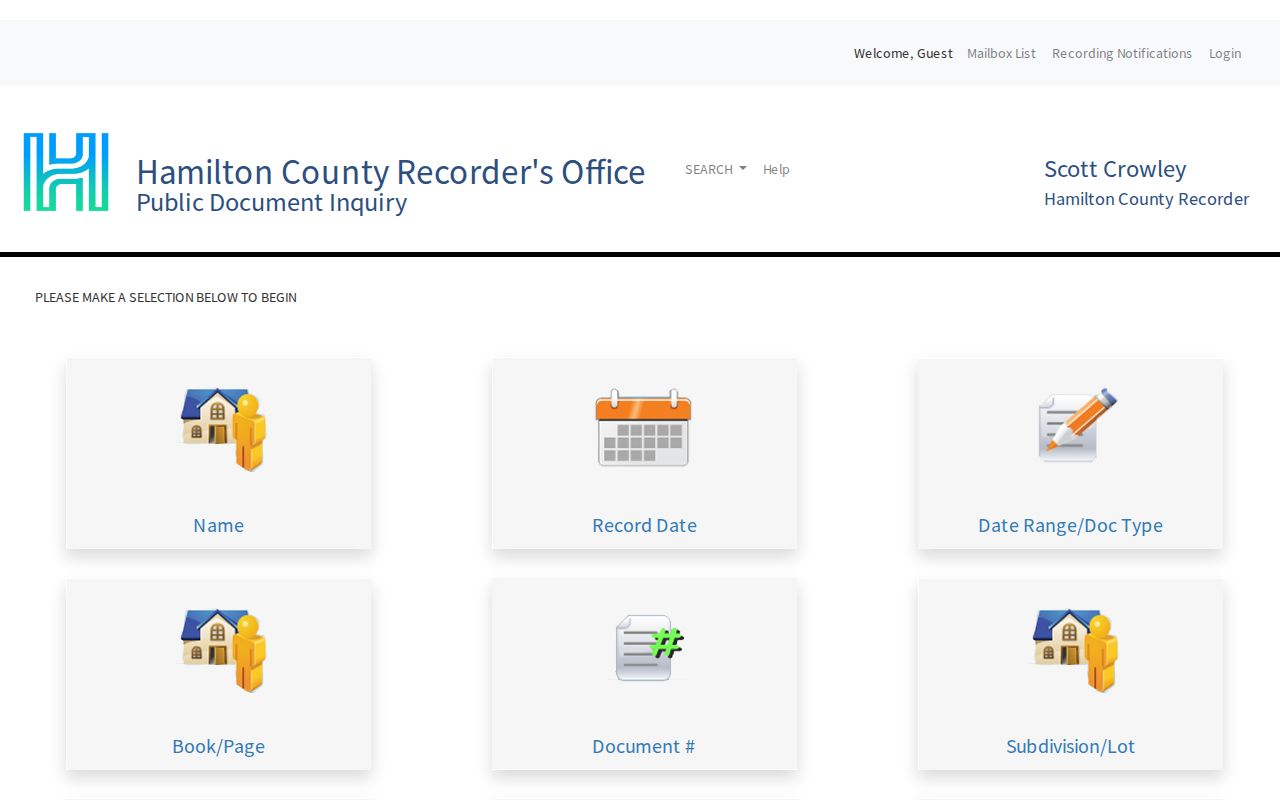
The index supplies a research key; the linked instrument and its legal description supply the context that a name search lacks.
Green Township Voter Records Have Limits
The Ohio Voter Toolkit is a one-person registration and precinct lookup. It requires first name, last name, and county, with a street-name selector used only to narrow a match. Select Hamilton County for a Green Township search. The official page suggests trying a derivative first name, a former last name, or a prior Ohio address when a match does not appear.
Ohio's public-record rules still protect telephone and email information, Social Security and ID data, Safe at Home registrations, designated public-service-worker addresses, and other protected material. Ohio voters do not register by party, and neither the lookup nor a voter file reveals ballot choices. A registration result can support a dated registration question, but it cannot establish a full household or current physical presence.
Use the official voter-lookup form for a narrow registration check.
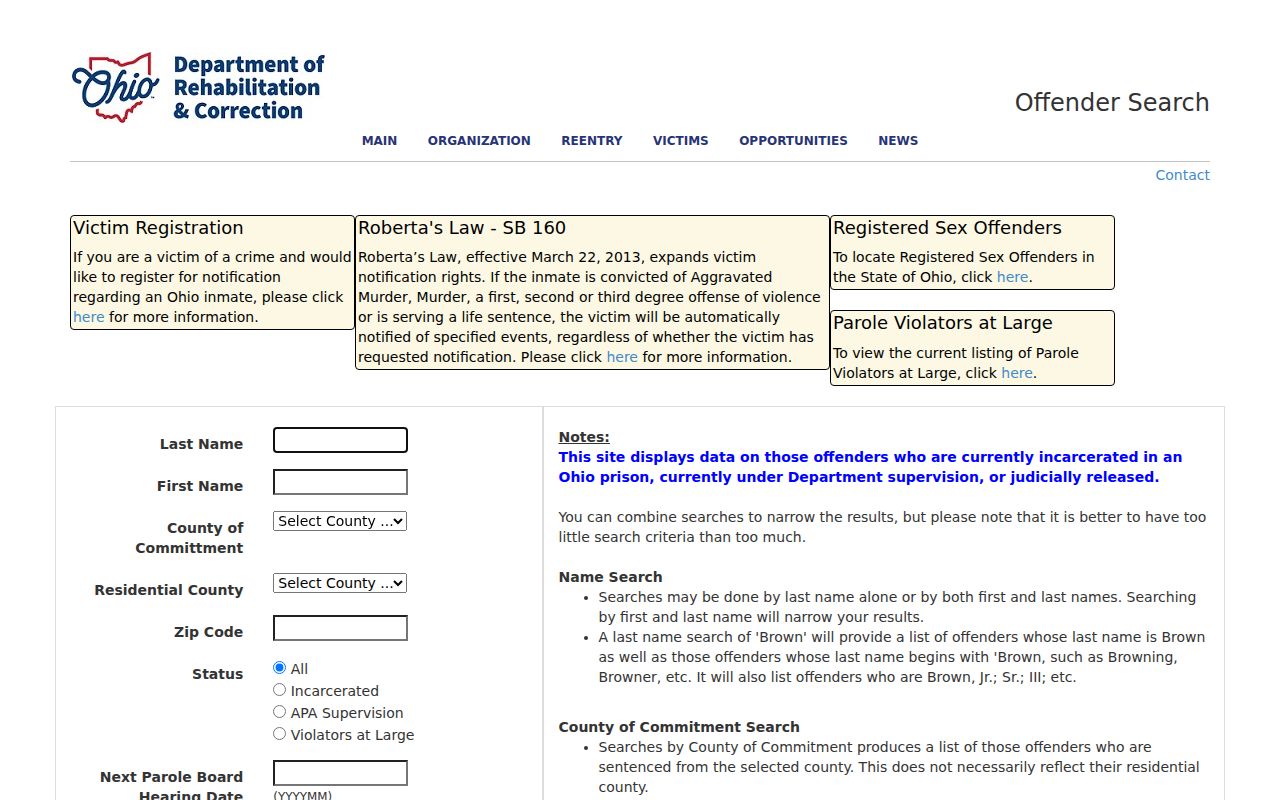
The required identity fields make this a verification route, not a tool for browsing a whole neighborhood.
Green Township's Current Resident Sources
Current directory-like records are fragmented by purpose. The County Auditor supplies an owner and property trail. The Recorder lists parties to recorded instruments. The voter route handles a single eligible registrant. Court, probate, license, and business records may confirm a defined relationship, but none replaces the others. Start with the record that fits the question, record its date, and use an independent source to test an important name or address match.
| Source | Who It Lists | Keeper | Access |
|---|---|---|---|
| Auditor property roll | Owners and taxable parcels | Hamilton County Auditor | Free online search |
| State voter lookup | Matching registered voter | Ohio Secretary of State / BOE | Free, protected fields excluded |
| Recorder Acclaim | Parties to recorded instruments | Hamilton County Recorder | Free public index |
| Clerk or Probate index | Parties to a defined court matter | Hamilton County courts | Search and counter routes vary |
| eLicense or business filing | Credential or filing affiliation | State of Ohio | Free official portal |
For a name that needs careful confirmation, the Green Township resident lookup route keeps property, registration, court, and historical evidence in their proper lanes.
Green Township Names in Court Records
A court name search can locate a case, not a biography. The Hamilton County Clerk name search lets a user select among Common Pleas civil or criminal, municipal civil or criminal/traffic, domestic relations, and Court of Appeals matters. It accepts last name, first name, optional date of birth for criminal work, company name, and optional beginning and ending dates. Use the smallest relevant court set, then preserve the court, case number, party role, and filing date before treating a similar name as a match.
The Clerk warns that its records are for public use, not bulk downloading or mining. A visible index result does not mean every document can be viewed online. The Clerk's Justice Center records inquiry is an in-person fallback, and a focused records request can identify the court, case number, caption, document type, date range, and desired copy format. Sealed or expunged records remain unavailable through a different search route.
See the Hamilton County Clerk records-search menu for the available court categories.
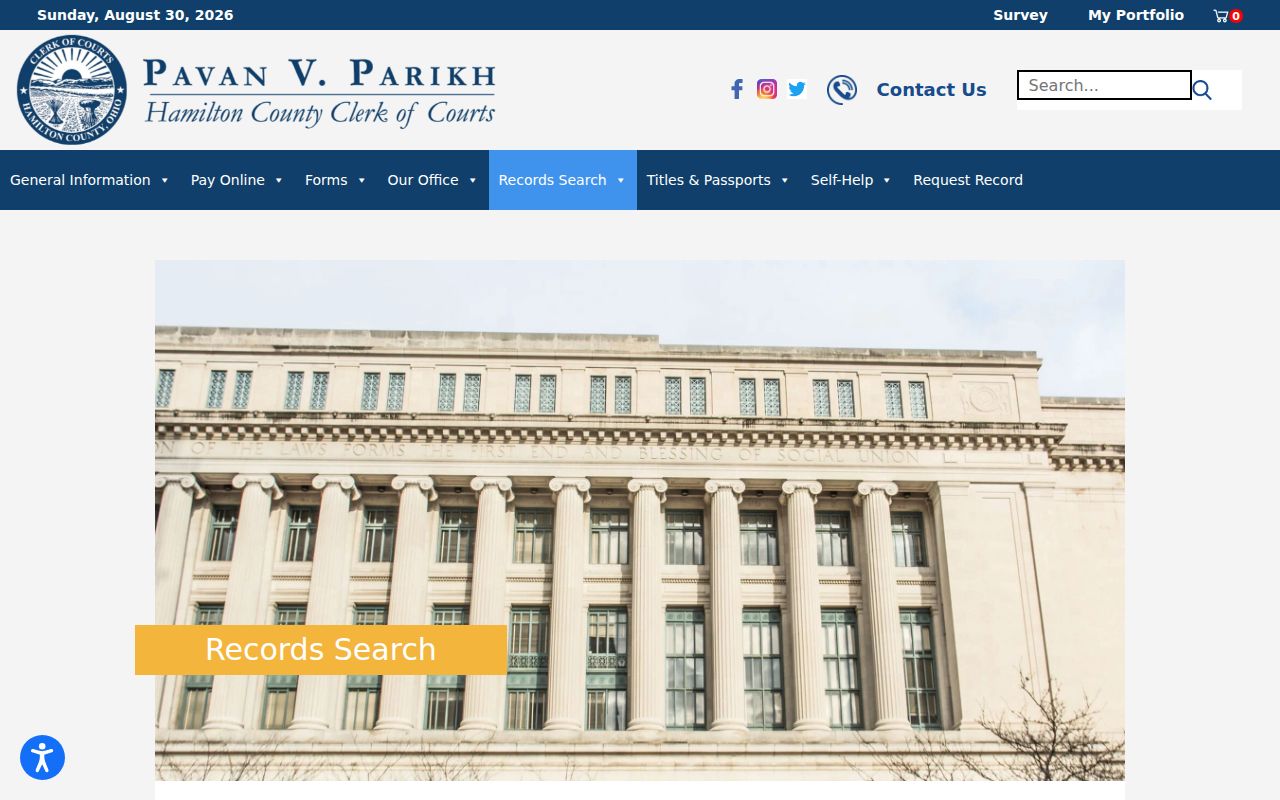
The category menu is a reminder to choose the proper division before a name-only search grows too broad.
Green Township Certificate Custodians
Birth and death certificates take a different route from marriage and divorce records. Hamilton County Public Health issues many Ohio birth and death certificates, while the Ohio Department of Health Vital Statistics office is the state route. Hamilton County Probate Court is the marriage-record custodian. Divorce is a court-file matter. A signed application and the correct custodian matter more than a generic name search.
Ohio Revised Code 3705.23 generally directs a local or state registrar to issue a certified birth or death record on a signed application and fee, subject to specific protections including adoption, medical or health information, and Social Security numbers. Ohio does not use a simple statewide rule that automatically closes all birth and death records after a fixed number of years. For an older death lead, the Ohio History Connection's free index covers specified statewide certificate periods, but its historical copies are not legal certificates.
Review the county certificate instructions before choosing an order method.
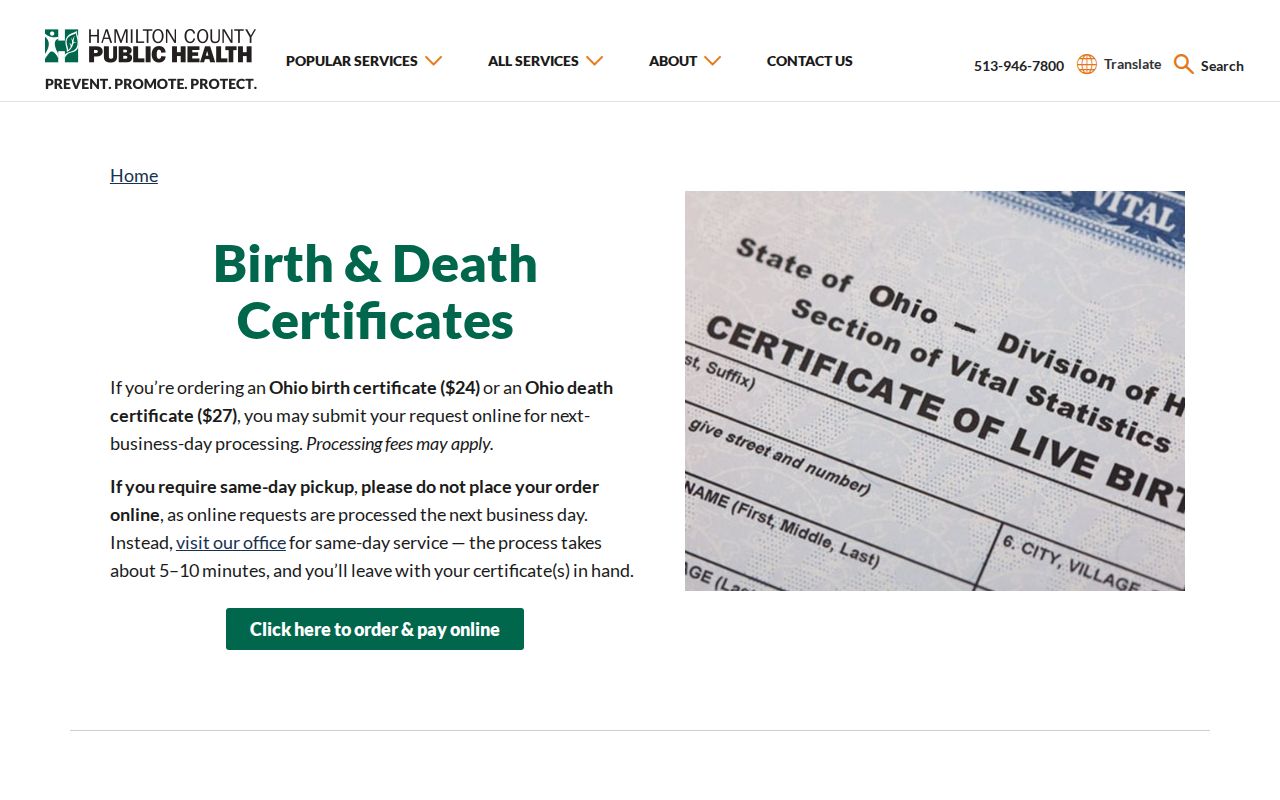
The local instructions help distinguish a certificate order from an open-ended effort to locate a person.
Green Township Requests When Indexes End
The Ohio Public Records Act, Ohio Revised Code 149.43, is the fallback for a defined record held by a public office. A request does not normally require an Ohio address, a name, or an explanation of purpose. Describe the record with reasonable clarity, ask to inspect or to receive a preferred copy medium, and retain the request and response. The office must make records available promptly for inspection and within a reasonable period for copies, but Ohio does not impose one universal production-day count.
Inspection is ordinarily free. A custodian may charge actual copy, medium, packing, delivery, or postage costs and may require prepayment. If a record contains exempt material, the office must release the nonexempt portion when it can be redacted. Green Township Police accepts narrowly described crash and criminal-report requests in person or by email, with a single report stated as free, while protected and investigative material remains subject to law. Township zoning, road, and permit requests also need an address, approximate date, record type, and the correct road or zoning authority.
Green Township History Changes Search Terms
Green Township is not the City of Green in Summit County, and its Cincinnati postal addresses do not set the political jurisdiction. The township formed in 1809. Its older research path also crosses changing borders: Westwood was annexed by Cincinnati in 1896, Beech Flats became Cheviot in 1900, and a large part of Covedale was annexed in 1930. A record that says Cincinnati, Cheviot, or an earlier community name may still be relevant, but it needs to be tied back to the period parcel, township, or boundary.
Historic place aliases are useful search tools. Mack may appear as Dry Ridge or Ebenezer. Dent began as Challensville. Monfort Heights was associated with Weisenbrugh or Wisenburg and its post office. Bridgetown, White Oak, and Covedale also work as community terms in directories, newspapers, maps, and records. These are leads to test, not substitutes for a legal description or dated county record.
Use the Green Township history to check the local geography behind a historical name.
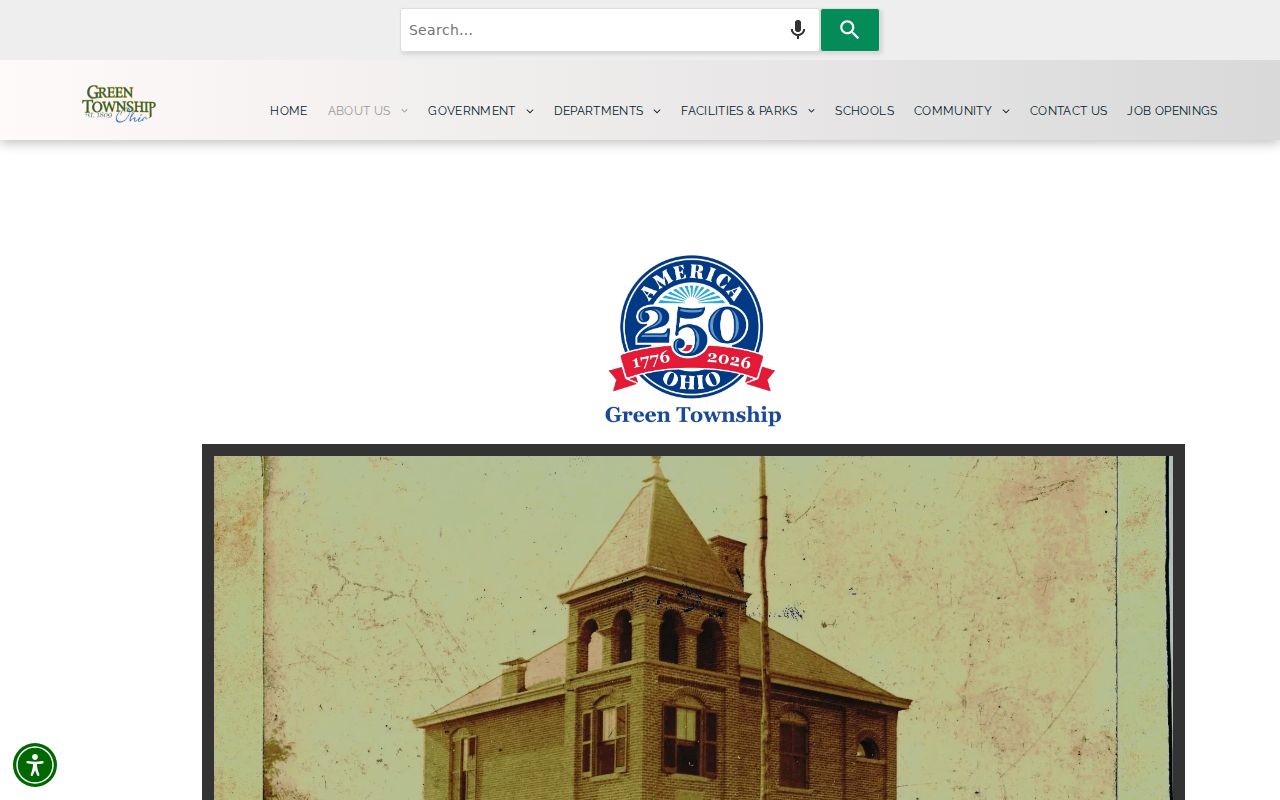
The township's historical overview helps keep postal labels and later municipal boundaries from being mistaken for one fixed place.
Green Township Privacy Controls
Public access has real boundaries. Ohio Safe at Home gives eligible participants a substitute address and changes the handling of election and other records. Protected voter registrations, court sealing or expungement, motor-vehicle restrictions, statutory exemptions, and redaction rules can remove fields or records that a public searcher expects to see. Ohio's personal-information redaction law also provides an internet-record process for qualifying information.
Use these sources for a lawful personal purpose such as family history, an estate question, civic research, or checking a property record. Do not use a name, address, or result to stalk, harass, intimidate, or harm anyone. A missing record can reflect privacy protection, a different custodian, an indexing limit, or an old spelling. It is not a reason to pursue a protected person through another system.
Green Township's Older Resident Sources
For historical residents, CHPL's county material is often a stronger first choice than assuming a Cincinnati city volume covered the whole township. The digitized Williams Hamilton County volumes verified online include 1887, 1889, 1891, 1893, 1897, 1899, 1901, 1905, 1907-08, 1909-10, 1911-12, 1939, and 1940. The 1905 volume arranges entries by name, post office, and township and includes Green Township communities such as Bridgetown, Dent, Mack, and Mt. Airy.
CHPL says its Cincinnati directory series reaches from 1819 to the present, but city coverage and township coverage are not the same. Pink Pages begin in 1925 and are called Criss-Cross directories by 1941. They can turn an exact address into a householder lead when the selected volume covers it. Pair each entry with its volume year, a visible page image, census and deed evidence, and the historic community name. The fuller collection and reading method appears in the Green Township city directories resource.
Visit the CHPL Genealogy and Local History service for its collection and research-help routes.
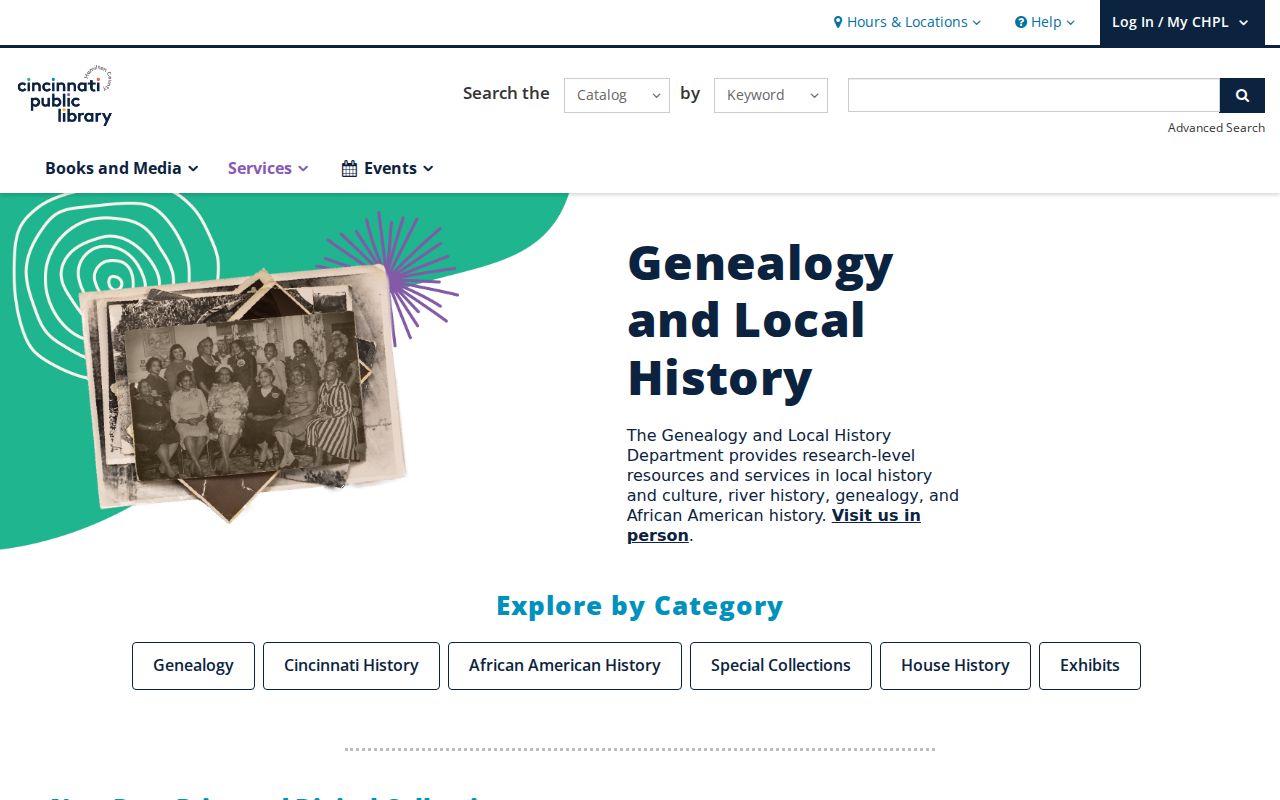
The library is the right fallback when an online property index cannot answer an older household question.